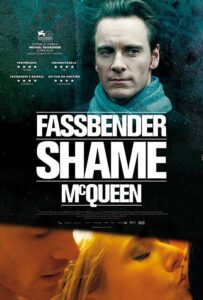
 Shame was that 2011 movie that most people heard about but few people saw. It happens to at least one film each year. In 2009, the movie identified with this label (The Hurt Locker) won a Best Picture Academy Award, putting the talented Jeremy Renner on the map for the first time. In the case of Shame, there was more of a reason for its obscurity than in some of the movies in other years. Shame is rated NC-17, and rightfully so. It chronicles the day-to-day lifestyle of Brandon (Michael Fassbender – A Dangerous Method, Haywire), a 30-something-year-old man addicted to sex. After earning similar recognition at other awards ceremonies, including The Golden Globes, Fassbender was considered a lock for an Academy Award Best Actor nomination. Fassbender, however, was not one of the five finalists for acting’s most prestigious award.
Continue reading Shame (2011)
Brothers (2009)
 Brothers, the Tobey Maguire/Jake Gyllenhaal/Natalie Portman collaboration, had the opportunity to be the very best movie of 2009. The trailer, showing a mentally unstable Maguire as a decorated soldier returning home from Afghanistan after being purported dead, shows us one thing is for sure…this isn’t the Tobey Maguire we are used to seeing in Spider-Man, Seabiscuit, or The Cider House Rules. From the three-minute movie trailer alone, I knew I would see this movie the day it came out because I was gripped by Maguire’s turn from a loving husband and nurturing father to a menacing psychopath.
Continue reading Brothers (2009)
Carnage (2011)
 Roman Polanski’s (The Pianist, Rosemary’s Baby) star-studded Carnage, a movie adapted from the successful Tony Award Winning God of Carnage, translates on the big screen as unsuccessfully as the play, I imagine at least) plays successfully on stage. I envision Yasmina Reza written One Act as an intriguing character study that unfolds before our eyes on stage, something we don’t get much chance to see in a play. Though I have not seen God of Carnage and do not plan on doing so, I imagine it as being similar to Arthur Miller’s Death of a Salesman in the sense that there are just a few characters which, in turn, allows us to see these characters developed deeper and in a more meaningful way than would a play like Romeo and Juliet. The whole time I was watching this movie, I kept asking myself why this play was made into a film and how it drew the interest of Polanski and the four (including three Academy Award Winning) actors. As a play, I envision this being great. As a movie, I asked myself, “Why?”. Continue reading Carnage (2011)
50/50 (2011)
 Joseph Gordon-Levitt (Inception, G.I. Joe: Rise of Cobra) further exemplified what I predicted of him after seeing 2009’s (500 Days) of Summer, which was that he was the next big thing in Hollywood. Gordon-Levitt (just 29 at the time) had already shown his abilities as a supporting actor in several critically acclaimed movies, including Stop-Loss, The Lookout, and Brick. However, these movies failed to top $11 million at the box office. (500 Days of Summer generated $32 million domestically and earned Gordon-Levitt a Best Actor in a Comedy or Musical Golden Globe Nomination. Though he did not win the award that year (Robert Downey Jr.’s won for his role in Sherlock Holmes), it opened the door for more starring roles for the young actor. This included the opportunity to star in 50/50, a movie where he earned his second Best Actor in a Comedy or Musical Golden Globe Nomination.
Continue reading 50/50 (2011)
The Adjustment Bureau (2011)
 As I started watching The Adjustment Bureau, I was surprised to see it was based on a short story by Philip K. Dick. I then spent the first ten minutes of the movie trying to think of all of the novels and short stories written by Dick that were made into movies. The list is massive and includes hits like (Minority Report, Blade Runner, A Scanner Darkly), misses like (Imposter, Next, Screamers), highly overrated movies (Total Recall), and highly underrated movies (Paycheck). I wouldn’t put The Adjustment Bureau in any of these categories. It was a moderate hit ($62 million domestically, $128 million worldwide) based on a $50 million budget. It earned a 72% approval rating on Rotten Tomatoes. It was more a hit than a miss, but it certainly was no Minority Report or Blade Runner. Another interesting fact about Dick was that for every movie/short story, he wrote that was made into a movie, he wrote 15-20 times as many that were not made into movies. Philip K. Dick was, in his day, to the science fiction genre what Stephen King is to the horror genre today.