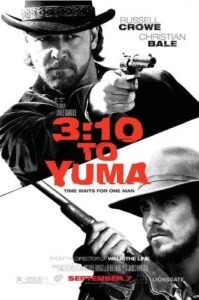
 The Western genre is dying. Gone are the days of John Wayne, Clint Eastwood, et al., and the era of Westerns in the 1950s, 1960s, and 1970s. Once a staple in American cinema, those films are now few and far between. Years could pass before a good Western connects with critics and audiences alike. Unforgiven reset the standard in 1992, connecting with critics and audiences alike while earning nine Oscar nominations and taking home four, most notably for Best Picture. Others have followed. Appaloosa, Hostiles, True Grit, Tombstone, and Open Range were big-budget movies that hit the screen with reckless aggression. True Grit was the most successful with critics (10 Oscar nominations, but no wins), but even its success pales in comparison to Unforgiven.
Some recently successful and much-appreciated movies might technically be classified as westerns (Dances With Wolves, Brokeback Mountain, The Assassination of Jesse James by the Coward Robert Ford, No Country for Old Men). Still, I wouldn’t put them in the same category as the others mentioned above. To me, they are a different kind of Western. The Westerns I’m referring to revolve around cowboys, stagecoaches, ranches, saloons, trains, card playing, and gunfights. This is why James Mangold’s 2007 (Walk the Line, Ford v Ferrari) remake of 1957’s 3:10 to Yuma is such a memorable film.
Two of Hollywood’s megastars met at the crossroads of their careers. The first was Russell Crowe, who was five years after back-to-back Oscar nominations (The Insider, Gladiator, A Beautiful Mind), and starred in his second western (1995’s The Quick and the Dead). Crowe plays bad guy Ben Wade, a ruthless killer and leader of a careless posse that sticks up banks, upends stagecoaches, and is quicker to the trigger than anyone he meets. When he isn’t out slaughtering others, he spends time alone reading, drawing pretty girls and owls on his small sketch pad, or contemplating life. He’s different from the other members of his gang because he can have that introspection. Wade communicates so much with his eyes and quiet, understated inner direction. Crowe’s career has been in decline in the 13 years since this film’s release. He’s still starred in some memorable ones (Les Misérables, The Nice Guys, Noah), but he has been far quieter than in the 13 years before the release of 3:10 to Yuma.

Then you have Christian Bale, who in 2007 was still three years shy of his four Oscar nominations in eight years but still had The Machinist, American Psycho, Equilibrium, and Batman Begins under his belt. Still developing as one of Hollywood’s elite, he delivered his most even-keeled performance as Dan Evans, a distressed but moralistic novice rancher drowning in debt because of an understaffed farmstead and a drought. His wife Alice (Gretchen Mol – Rounders, Manchester by the Sea) and teenage son Will (Logan Lerman) no longer believe he can maintain the ranch. Stubborn but keenly aware, Dan knows they are both right but refuses to admit it.
When Dan and Will go into town to try to get an extension on what they owe, they witness from a distance Ben and his gang, which includes his right-hand man Charlie (Ben Foster – Leave No Trace, Hell or High Water), knock over a stagecoach and kill innocent men. Through a series of events, Ben is apprehended and handcuffed and ready to be escorted to the nearby town of Contention, where the 3:10 p.m. train will transfer him to the prison in nearby Yuma, where he almost certainly will face death.

Needing the money, Dan agrees to join the transport party. Via horseback, with a handful of men he does not know, he chaperones Ben to Contention. The journey takes a day and a half. Ben is dangerous, and his gang is out looking for him. They won’t stop if they find the convoy. Dan is faithful to his word, though, especially in front of his son. He’s a man who will do what he promises, even if it costs him his land, his family, or his life.
The absolute pleasure of this film is not the setting, the score, or the cinematography, all of which are great. Nor are the action scenes spectacular. It is the slow build of each lead character individually, and then the relationship that forms between them. It is the purposeful conversations the men have with each other, knowing neither has ever been around someone as intelligent or as committed to a task. Although their agendas differ, they establish mutual respect quickly. Ben greatly admires Dan’s commitment to fulfilling his duty but tries his best to talk him out of it, not because Ben wants his freedom (he knows his boys will see to it that he is kept off that train), but because he doesn’t wish to see Dan’s son grow up without a father. Crowe and Bale have cinematic chemistry and brought the screenplay to life. Mangold, Crowe, and Bale’s unified vision made 3:10 to Yuma one of the best westerns of the last 25 years and one of the best movies of 2007.
Plot 7.5/10
Character Development 8.5/10
Character Chemistry 9.5/10
Acting 9.5/10
Screenplay 9/10
Directing 9/10
Cinematography 9.5/10
Sound 9/10
Hook and Reel 9/10
Universal Relevance 8.5/10
89%
Movies You Might Like If You Liked This Movie
- Hostiles
- The Assassination of Jesse James by the Coward Robert Ford
- Tombstone
- The Hateful Eight
- True Grit