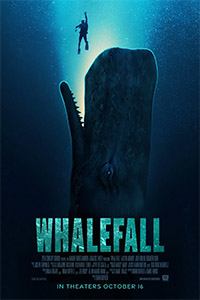
 This thing was rough. Setting aside the implausibility, Brian Duffield’s (Underwater, No One Will Save You) Whalefall still doesn’t offer anything we haven’t seen before. The imperfect father-son relationship. The conversations we had, and the ones we didn’t. The anger. The wishing we had one more day together. The regret. The guilt. Duffield uses an 80-foot, 60-ton sperm whale that swallows his lead character whole as the vessel for his story of life, loss, and redemption.
One year after his father, Mitt (Josh Brolin – The Dog Stars, Sicario), a deep sea diving legend turned cancer-ridden sufferer, commits suicide by sinking himself with weights attached to his body in an ocean bay, Jay (Austin Abrams – Resident Evil, The Starling Girl) makes the decision to gear up with his scuba suit and search the floor of where his father sank, hoping to find his father’s bone or some other remnant that can give closure for him, his mother Zara (Elizabeth Shue – Leaving Las Vegas, Hollow Man), and his two sisters who haven’t successfully reconciled with the fact that the tomb they visit at the graveyard is empty. Great premise…
 Much has been made of Ridley Scott’s (Prometheus, Robin Hood) films in the last decade or so as being a far cry from those earlier in his career. Highly anticipated, high-budget films such as
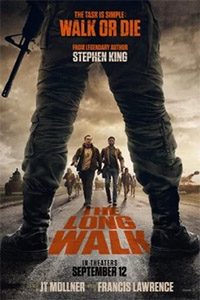 Sometimes it’s tough not to recommend a good movie. While there are exceptions to the rule, they are rare. Francis Lawrence’s (
 How do you stay concealed in a world that makes it nearly impossible to do so? How can you safely hide your identity at all times when all it takes is a partial photo of your face for the wrong person to learn more about you than you could imagine that they could ever know? These are all-too-real questions tackled by Relay, director David Mackenzie’s (
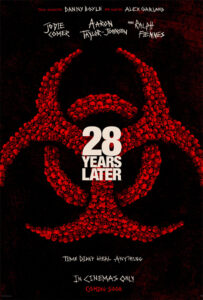 When director Danny Boyle (Slumdog Millionaire,