“Anything that can go wrong will go wrong.” – Murphy’s Law.
This quote could be the tagline for Max Winkler’s (Flower, Ceremony) third featured film, the intense and gritty Jungleland. Set against the backdrop of the heartland of present-day America, Bostonian brothers Stanley (Charlie Hunnam – The Lost City of Z, Papillon) and Lion (Jack O’Connell – Unbroken, Money Monster) travel from their Massachusetts home to San Francisco, where they will participate in Jungleland. Jungleland is a $100,000 bare-knuckles prize fight tournament in which a local gangster named Pepper (Jonathan Majors – Creed III, White Boy Rick) can secure a spot for Lion. Lion is a skilled lightweight boxer who is banned from traditional boxing matches after Stan, who also serves as his manager, is caught trying to bribe a referee. This incident happens before the start of the film, but it establishes Stan as a shady dealer who will do anything to make a quick buck. The main problem is that he makes terrible deals and ends up deeply in debt. The brothers work at a sewing factory, but this isn’t enough to get Stan out of the hole he dug himself. And while Lion is one of the best fighters, the back alley clubs that hold these unsanctioned fights can only pay their winners up to two hundred dollars per fight. It’s simply not enough to pay back what he owes and keep food on the table for the duo.
2020 has been a year with many movies either delayed to later in the year or postponed entirely until 2021. Films considered for Oscar awards this year are receiving an extension on their release dates. That extra time could be extended even longer, depending on events later this year because of the 2020 pandemic. Many movies have skipped theaters and gone straight to on-demand. One of those movies that will need to worry about Oscar consideration this year is Tate Taylor’s (The Help, The Girl on the Train) Ava.
In the mold of great thrillers like Unlawful Entry, The Hand That Rocks the Cradle, Sleeping With the Enemy, Pacific Heights, Single White Female, and Deceived comes Neil LaBute’s (Death at a Funeral, The Wicker Man) 2008 underappreciated Lakeview Terrace. This movie is designed to elicit powerful reactions from its audience. While this movie never felt that far-fetched (until maybe its final scenes), it seems less like a fictional story than I believed it to be, given what we see daily about racism and racial violence as I write this in 2020.
My recent apparent 2020 trend of alternating between Christian Bale, Denzel Washington, and Russell Crowe movies continues with my review of Mary Harron’s 2000 cult classic American Psycho. In his first lead role, this film introduced an experienced but still grossly undiscovered Bale (The Fighter, Ford v Ferrari) to the screen.
American Psycho seems like a movie that most people have seen. If you haven’t seen it, you’ve at least heard of it. I’ve seen it three or four times, and each time, I think I end up liking it more than the time before. And that’s not saying a lot because I wouldn’t say I liked it the first time I saw it and got upset with myself for watching it every four or five years. I want it to be good. It’s just not. The main reason is that it is too obscure. I’m not too fond of zany or batty. I also sometimes like everything laid out before me, so I don’t have to think. American Psycho makes you think, but you have to think too hard, and then you wonder whether what you thought was correct or not anywhere close to what Harron intended.
Denzel Washington (Flight, He Got Game) and Ethan Hawke (Before the Devil Knows You’re Dead, Boyhood) began their careers in 1985. Washington has a more storied career with four Oscar nominations between 1987 and 1999 (Cry Freedom, Glory, Malcolm X, The Hurricane). The underrated Hawke had starred in movies such as Reality Bites, Before Sunrise, Gattaca, and Hamlet before the turn of the century. But it took Antoine Fuqua’s (Southpaw, Tears of the Sun) gritty, determined, and so far over-the-top Training Day for these two Hollywood heavyweights to meet on the big screen for the first time. The result is the crowning acting achievement of each actor’s career.
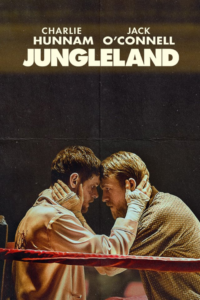 “Anything that can go wrong will go wrong.” – Murphy’s Law.
 2020 has been a year with many movies either delayed to later in the year or postponed entirely until 2021. Films considered for Oscar awards this year are receiving an extension on their release dates. That extra time could be extended even longer, depending on events later this year because of the 2020 pandemic. Many movies have skipped theaters and gone straight to on-demand. One of those movies that will need to worry about Oscar consideration this year is Tate Taylor’s (The Help,
 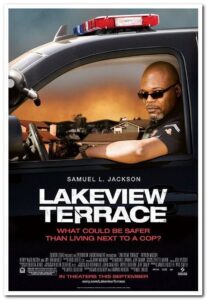 In the mold of great thrillers like Unlawful Entry, The Hand That Rocks the Cradle, Sleeping With the Enemy, Pacific Heights, Single White Female, and Deceived comes Neil LaBute’s (Death at a Funeral, The Wicker Man) 2008 underappreciated Lakeview Terrace. This movie is designed to elicit powerful reactions from its audience. While this movie never felt that far-fetched (until maybe its final scenes), it seems less like a fictional story than I believed it to be, given what we see daily about racism and racial violence as I write this in 2020.
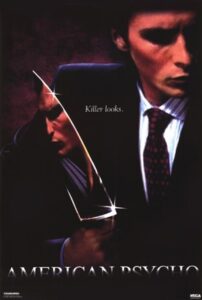 My recent apparent 2020 trend of alternating between Christian Bale, Denzel Washington, and Russell Crowe movies continues with my review of Mary Harron’s 2000 cult classic American Psycho. In his first lead role, this film introduced an experienced but still grossly undiscovered Bale (
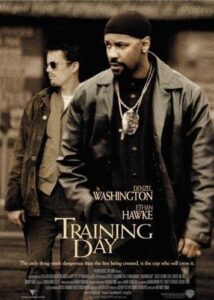 Denzel Washington (